 Blog
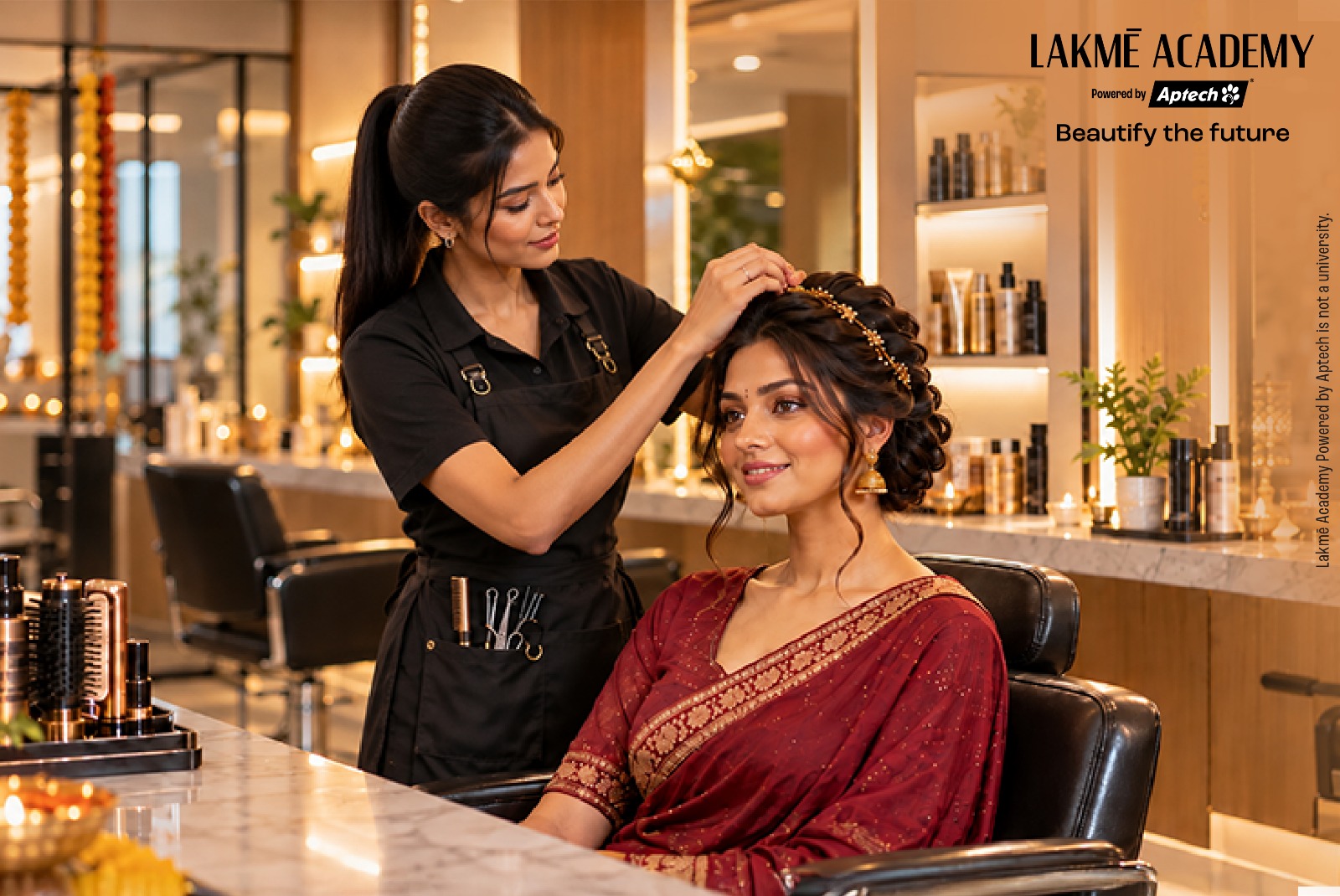
Festive hairstyles should enhance an outfit, sit comfortably for a long celebration and maintain shape. Soft waves, elegant buns, intricate braids and sleek ponytails offer finishing touches, but each has its advantages and drawbacks depending on the attendee, the occasion and the outfit.
For a hair stylist, this requires not only mastering such techniques but also being able to adapt the chosen solution to the client’s requirements. Therefore, a proper hair styling course could provide the necessary skills and know-how to excel in the industry. A hair styling course can also help learners practise techniques for different occasion.
Table of Contents
- Soft Waves for an Effortless Festive Look
- Elegant Buns for Traditional Occasions
- Braided Hairstyles with a Modern Touch
- Sleek Ponytails for Contemporary Styling
- Why Professional Hairstyling Skills Matter
- How to Build Your Hairstyling Skills
- Conclusion
- FAQs
Soft Waves for an Effortless Festive Look
Soft waves could be used for an Indo-Western outfit, as well as a gown and lehenga. Such a hairstyle is appropriate for both daytime and evening events. For the former, loose waves would be the perfect choice, whereas tighter ones would finish off the evening look.
The placement of a part and additional accessories could also take the style from a classic to a more modern appearance, depending on the occasion. Moreover, preparation, products and tools should be considered before creating the perfect wave. Although such a hairstyle should appear voluminous and well-defined, it should not feel tight or be overly greasy.
By attending a hair stylist course , one can acquire the necessary technique to practice on different models and hair types in order to be able to offer clients multiple options. A hair stylist course may also include practice with different tools and finishes. A hair styling course can help learners practise these techniques in a structured way.
Elegant Buns for Traditional Occasions
Buns are also an excellent choice for a festive event as they keep the hair neatly tucked away to make space for accessories such as necklaces and earrings. This hairstyle can also be made lower or higher depending on the clothes, namely whether it is a saree or lehenga.
In addition, the bun can be created in a way to highlight the facial features if it is a low ponytail or left loose in case of a casual event.
Braided Hairstyles with a Modern Touch
A side braid was a staple in the past, but now there are several more complex variations that could also be considered. A more intricate design would be appropriate for a more elaborately decorated ensemble, whereas braids with minimalistic accessories would suit a daytime celebration.
Braids could also be combined with other hair types described below for a more unique look. In addition, it is important to remember that braids require equal division of hair strands and moderate tension so that the result is not painful to touch and does not ruin the hair’s natural symmetry.
When looking at hairstyles in a training course, it is important to see if the program offers to learn more about braids and how to incorporate them into an overall look. Reviewing course hairstyles can help learners understand the range of looks covered. Course hairstyles should include examples suited to different occasions.
Sleek Ponytails for Contemporary Styling
Ponytails are ideal for gowns, modern attire and certain Indo-Western outfits. They could also be placed either higher or lower depending on the desired effect. A well-groomed side part, a smooth crown and the elimination of frizzy hairs are essential for such a hairstyle.
However, creating such an effect is not as easy as it may seem. A hair stylist course should provide the necessary practice to build a stable hand and perfect the required skills in order to be able to groom a ponytail to a reasonable degree. Hair styling classes can give beginners time to practise the technique.
Why Professional Hairstyling Skills Matter
The image above is a great example of a hairstyle, but it does little to show how a novice hair stylist could adapt the same pattern to different hair types. Therefore, a certain amount of practice should be provided to allow a budding professional to understand the importance of tension, sectioning and other techniques before offering their services to actual clients.
In addition, this kind of knowledge could be applied to more important matters, such as building a successful career. In this regard, a proper course not only provides the necessary tools but also helps one advance in the chosen profession steadily.
How to Build Your Hairstyling Skills
As mentioned above, it is important to build a solid foundation of knowledge rather than trying to run before being able to walk. Therefore, attending hair styling classes to learn more about waves, buns, braids and ponytails should be a priority for any novice hair stylist. hair styling classes can also help learners compare approaches to waves, buns and braids.
When choosing between similar training programs, it is important to consider the included practical sessions and the overall knowledge imparted by the course. A good choice will also show that the program covers all the necessary aspects of a hair stylist’s job. A hair stylist course should provide practice that reflects the work a stylist may be asked to do. Hair styling training courses can differ in the amount of guided practice they offer.
In other words, a proper course should equip a student with all the skills needed to groom a full range of hair types and looks. Moreover, the two should be correlated to avoid the “textbook appearance,” which is often frowned upon in the industry. Therefore, when selecting a training program, the best option is to look at the provided examples (hairstyles) each time. Reviewing course hairstyles can help compare the styles taught in each programme.
To choose between two seemingly similar courses, one should take into consideration the type of practice offered. In addition, it is important to check the current offers from a given institution to confirm that the program and its duration have not changed. In this regard, it is better to contact a representative of Lakmē Academy Powered by Aptech to get the necessary information to determine the most fitting option. Comparing hair styling training courses can also clarify differences in practical sessions. Comparing hair styling training courses can help clarify the practical work included.
Conclusion
Festive hairstyling is an important skill that needs to be upgraded constantly in order to remain competitive. However, it is always vital to know which solution to choose for a specific client on a certain occasion.
Ultimately, such a specialist should know how to adapt a look to a given outfit and occasion while providing the client with multiple options. By attending a hair styling course , a novice hair stylist can build the necessary skill set to provide such services confidently.
FAQs
- Which hairstyles work well for festive occasions?
Ans - Depending on the outfit, soft waves, elegant buns, braids and sleek ponytails are all good options. However, it is important to consider the event itself and the hair type when choosing a certain look. It is always better to practice on different clients rather than using the exact same technique each time. Make sure the course offers to build such a skill set.
- What should beginners practise first?
Ans - Novice hair stylists could begin with waves, buns, clean braids and ponytails. In addition, a few guided sessions may be helpful to build a solid foundation of practical hair styling knowledge. Hair styling classes can help learners build confidence with these basics.
- Why is practical hairstyling training important?
Ans - Practical training builds a hair stylist’s skills through repeated practice. In addition, it allows one to learn the strengths and drawbacks of each technique as well as the necessary tools and products.
- Can hairstyling skills lead to career opportunities?
Ans - They can certainly help build a successful career in the beauty and fashion industry. In this regard, each trainee should consider the available options and choose a certain path, which would help them remain motivated.
- What should I check before choosing a course? Ask for examples of course hairstyles before making a decision. Compare hair styling training courses by reviewing the curriculum and practice sessions.
Ans - First of all, it is essential to examine the program and the practical training course to see if they align with one’s expectations. Secondly, it is important to consider the current offers of the institution to ensure that the duration and content of the program have not been changed. Ultimately, compare the options and choose the one that best fits the given requirements.

